

Unfortunately there are very few career opportunities for people who want to work with deer or with other related ungulates. The competition for what few deer management jobs are available is extremely intense because of the large number of people who apply for them.
Most people who work in some way with deer, do so as a hobby in their spare time, and derive the greater part of their income from other means.
However, if you have a very strong interest in this field, it is perhaps normal that you will want to find employment within it.
Deer Management Jobs to Consider
There are a number of deer management job options listed below, which can serve as a rough outline of the career paths before you in deer and forestry management.
Wildlife Warden or Park Ranger
Wildlife Wardens or park rangers help manage and control areas of wildlife interest. They usually work for a local council or one of the government agencies such as English Nature.
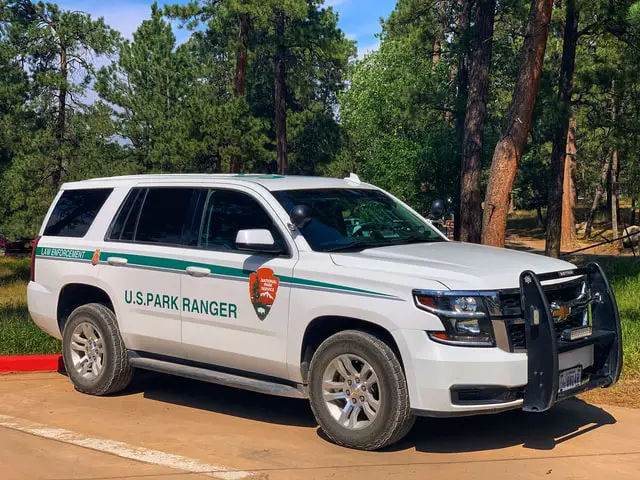
Although Wildlife wardens do a variety of tasks, and care for a range of wildlife species, if the area where you work contains deer there is a good chance that you will have the possibility to work with deer. This makes a game warden or park ranger one of the more popular deer management jobs, and one that may be available in your area.
Much of the work that a wildlife ranger does is manual and concerned with practical countryside management.
Rangers provide access to countryside areas for the general public and help keep wildlife sites in good order. This is a very interesting and rewarding job and competition for positions is severe.
Typically candidates are expected to have a BS and/or a MS in biology or related areas plus a number of years of practical voluntary experience.
Positions can be found in your national, state, or local government website.
Deer Researcher
Another possibility for people interested in deer is to work in one of the research groups that studies deer.
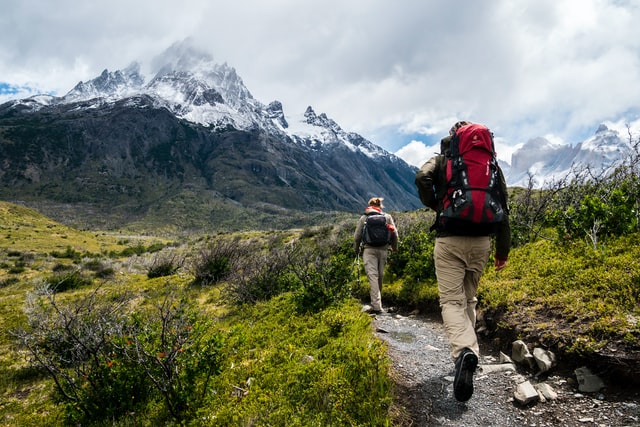
These groups, based in university biology or zoology departments, study how deer live and behave.
However, competition for positions within these groups is fiercely intense. This is because this is a very interesting area to do research in. The number of positions is small and they are well paid.
A PhD advertised by Tim Coulson of Imperial College London on Soay sheep recently received over 400 applications! Realistically you have to have at least 5 years research experience to get to the interview stage for a PhD studentship.
To improve your chances get as much research experience as possible. Try to publish. Gain additional skills such as in statistics or GIS. You have to have experience of doing your own research independently.
One of the most well known groups in the UK is the large animal research group (L.A.R.G.). This is Tim Clutton-Brock’s group at Cambridge University. He studies Red Deer on the Scottish island of Rum and takes on 2 students each year.
Another competitive opportunity is the PhD on Rum studying Feral Goat behavior with Robin Dunbar.
Estate Worker / Game Keeper
There is the possibility of working as an estate worker or gamekeeper. People raise deer for meat, for pleasure, and for hunting on estates. Someone needs to manage and care for them.
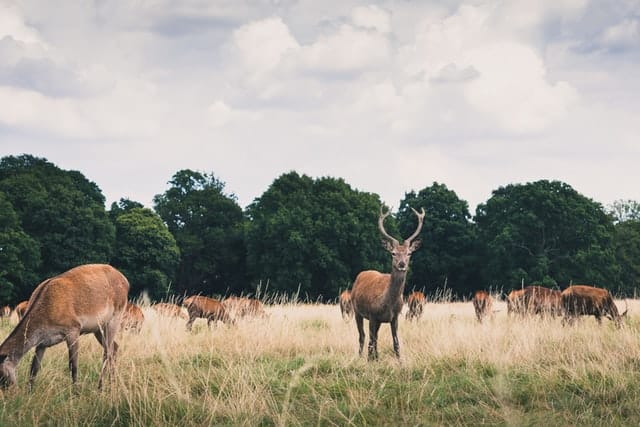
Such a job will involve producing habitats in which deer thrive and assisting in the hunting of deer. However, if you have a genuine love for deer you will naturally be reluctant to be involved in their destruction. Such a job almost certainly entails this … either through hunting or through slaughter for meat.
Controlling the deer population is needed in many areas, and is an essential part of deer management.
Where deer population are too high the environment suffers and deer begin to starve. Working on an estate is different. It involves not simply controlling the deer population for its own good, but helping hunting of deer for pleasure.
The majority of deer hunters are thoughtful and understanding of the animals they shoot. Most have a deep love of nature. They understand that deer have to be controlled and try to do so in the most sensitive way.
Zoo or Wildlife Park Work
Another possibility for people interested in working with ungulates is to work in a zoo or wildlife rehabilitation park.
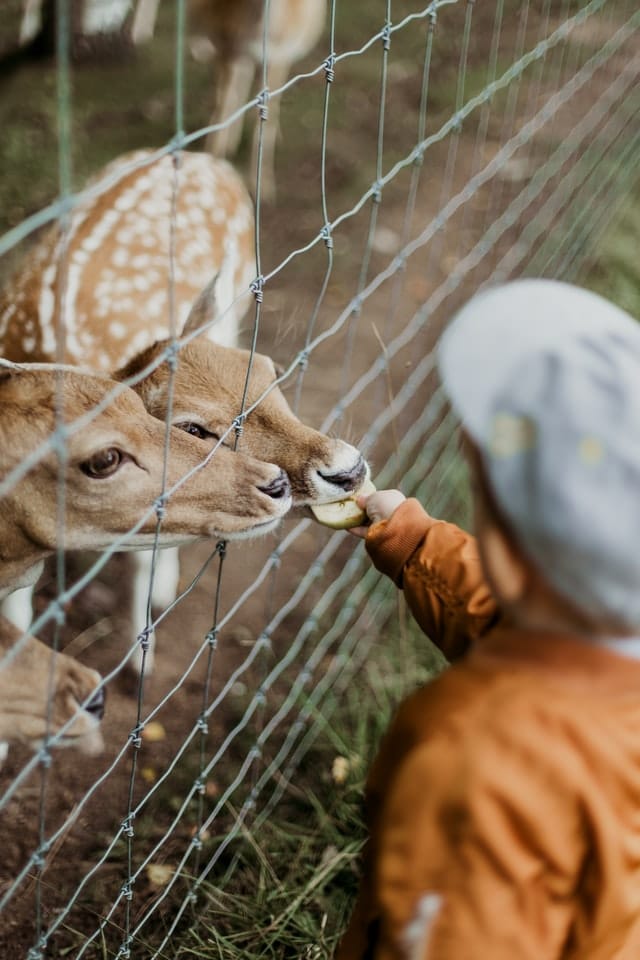
Zoos keep a range of interesting ungulate species, most of which are by their nature exotic. Obviously these need to be cared for. So there is the possibility of working in a zoo as a zookeeper caring for these animals.
Zoos also need people to organize conservation, research and education projects on the animals that they keep. This also offers work opportunities.
Once again competition for positions in zoos and wildlife parks is fierce. These are great, fulfilling jobs and a lot of people want them.
Deer Management as a Career of Passion
Ultimately, a career in deer management often stems from a deep passion for wildlife and the environment. Professionals in this field leverage their love for the outdoors and commitment to conservation to make meaningful contributions to the well-being of deer and their habitats.
Expanding Your Knowledge with Additional Resources
Continuously expanding your knowledge through books, scientific papers, and online courses can elevate your expertise in deer management. Understanding the health challenges deer face, for instance, can better equip deer managers to address those issues.
Frequently Asked Questions
How do deer managers handle conflicts with local communities?
Deer managers often act as mediators to address concerns. They use education and community outreach to inform the public about deer management practices and to develop solutions that work for both the community and the wildlife.
Is financial planning needed in deer management?
Absolutely, the adequate planning and allocation of financial resources are crucial for successfully carrying out conservation projects and management programs.
What are some ways to gain experience in deer management?
Volunteering, internships, and participating in citizen science programs are great ways to gain first-hand experience in the field.
What are the long-term career prospects in deer management?
Deer management offers a range of long-term career opportunities, with paths for advancement into research, policy development, or conservation leadership roles.
How can deer managers advocate for sustainable practices?
By educating the public, engaging with policymakers, and collaborating with conservation organizations, deer managers can promote sustainability in wildlife management.
What impact does citizen science have on deer management?
Citizen science can aid deer management by increasing public engagement and providing valuable data that contributes to research and conservation efforts.


